
With Magento 2 Custom Development for Scalable Stores at the forefront, this paragraph opens a window to an amazing start and intrigue, inviting readers to embark on a storytelling filled with unexpected twists and insights.
Magento 2 custom development is a powerful tool for enhancing e-commerce stores, offering unique features and customization options that can take your online store to the next level. In this guide, we will explore the importance of custom development for scalable stores and how it can optimize website performance.
Overview of Magento 2 Custom Development
Magento 2 custom development involves tailoring and extending the functionalities of a Magento 2 e-commerce store to meet specific business needs and requirements. This process may include creating custom modules, themes, or extensions to enhance the store's performance and user experience.
Importance of Custom Development for Scalable Stores
Custom development plays a crucial role in ensuring the scalability of an e-commerce store. By customizing the store's features and functionalities, businesses can adapt to changing market trends, scale their operations, and meet the demands of a growing customer base.
Custom development allows for flexibility and innovation, enabling businesses to stay competitive in the ever-evolving e-commerce landscape.
- Scalability: Custom development enables businesses to scale their store efficiently by adding new features, optimizing performance, and improving user experience.
- Personalization: Customized solutions allow businesses to tailor their store to the unique needs and preferences of their target audience, enhancing customer satisfaction and loyalty.
- Integration: Custom development facilitates seamless integration with third-party systems and tools, enabling businesses to streamline their operations and enhance overall efficiency.
- Performance: Custom-built solutions are optimized for performance, ensuring fast loading times, smooth navigation, and a responsive user interface.
Examples of Magento 2 Custom Development
Magento 2 custom development can include the creation of custom modules for specific functionalities such as advanced search options, personalized product recommendations, or seamless checkout processes. Additionally, custom themes can be designed to reflect a brand's unique identity and enhance the overall user experience.
Integrating custom payment gateways, shipping methods, or CRM systems are also common examples of how custom development can enhance an e-commerce store's capabilities.
Key Features of Magento 2 Custom Development
Magento 2 custom development offers a range of key features that make it ideal for scalable stores. Let's explore some of these features below.
Customization Capabilities
Magento 2 provides extensive customization options, allowing businesses to tailor their online stores to meet specific requirements. From customizing the look and feel of the store to implementing unique functionalities, Magento 2 offers flexibility that sets it apart from other e-commerce platforms.
This level of customization empowers businesses to create a unique and engaging shopping experience for their customers.
Scalability
One of the standout features of Magento 2 custom development is its scalability. As businesses grow and expand, Magento 2 can easily accommodate increased traffic, products, and transactions without compromising performance. This scalability ensures that the online store can handle the demands of a growing customer base and evolving business needs.
Performance Optimization
Magento 2 custom development focuses on optimizing website performance to deliver a seamless and fast shopping experience. With built-in performance enhancements, such as full-page caching, improved indexing, and faster loading times, Magento 2 ensures that online stores run efficiently even during peak traffic periods.
This optimization not only enhances user experience but also contributes to higher conversion rates and customer satisfaction.
Custom Extensions and Integrations
Developing custom extensions for Magento 2 involves creating additional functionalities or features tailored to specific business needs. This process usually requires coding expertise and an understanding of Magento's architecture to ensure seamless integration with the platform.
Popular Integrations
- Payment Gateways: Integrating popular payment gateways like PayPal, Stripe, or Square allows customers to make secure online transactions.
- Shipping Carriers: Integration with shipping carriers such as FedEx, UPS, or DHL enables real-time shipping rates calculation and tracking for customers.
- CRM Systems: Connecting Magento with CRM systems like Salesforce or HubSpot helps streamline customer data management and improve marketing strategies.
Benefits of Integrating Third-Party Services
Integrating third-party services through custom development offers several advantages for e-commerce stores. By leveraging custom extensions, businesses can:
- Enhance Customer Experience: Integrating services like live chat, product recommendations, or loyalty programs can improve user engagement and satisfaction.
- Streamline Operations: Automation through integrations with inventory management systems, ERPs, or accounting software helps optimize business processes and reduce manual tasks.
- Gain Competitive Edge: Custom integrations allow businesses to differentiate themselves by offering unique features or services that competitors may not have.
Scalability and Performance Optimization
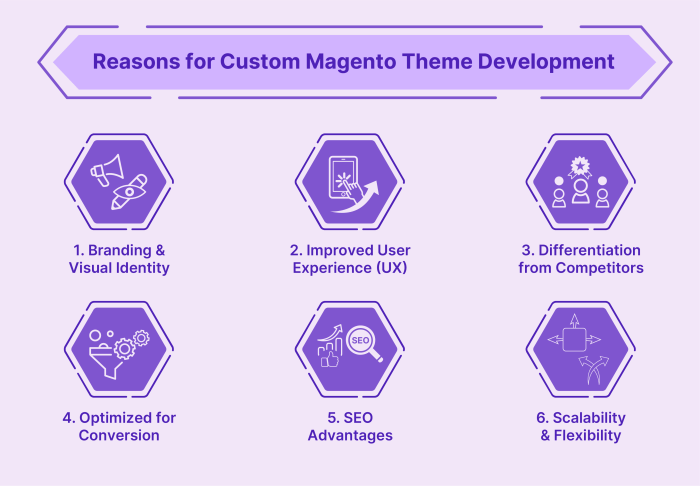
When it comes to optimizing the performance of your Magento 2 store through custom development, there are several techniques that can be implemented to ensure a smooth and efficient user experience. Additionally, scalability options can be leveraged to accommodate growth and increased traffic on your store.
By following best practices, you can maintain a scalable and high-performing Magento 2 store.
Performance Optimization Techniques
- Enable Full Page Caching: Utilize full page caching to reduce server load and decrease load times for users.
- Optimize Images: Compress and optimize images to reduce page load times and improve overall performance.
- Minify CSS and JavaScript: Minifying CSS and JavaScript files can help reduce file sizes and improve loading speeds.
- Utilize Content Delivery Networks (CDNs): Implement CDNs to distribute content geographically and reduce server response times.
- Database Optimization: Regularly optimize and clean up your database to improve performance and reduce load times.
Scalability Options
- Horizontal Scaling: Implement horizontal scaling by adding more servers to distribute the load and handle increased traffic.
- Elasticsearch Integration: Integrate Elasticsearch for improved search functionality and scalability.
- Queue Management: Utilize queue management systems to offload tasks and processes, improving scalability and performance.
- Cloud Hosting: Consider hosting your Magento 2 store on cloud platforms for scalability and flexibility in resource allocation.
Best Practices for Scalability and Performance
- Regular Performance Monitoring: Monitor your store's performance metrics regularly to identify bottlenecks and areas for improvement.
- Optimize Third-Party Extensions: Ensure that third-party extensions are optimized and do not impact the performance of your store.
- Implement Lazy Loading: Use lazy loading techniques to defer the loading of non-essential resources and improve page load times.
- Implement Code Optimization: Optimize code to reduce redundant queries and improve overall performance.
- Regularly Update Magento: Keep your Magento 2 store updated to leverage performance improvements and security patches.
Security Considerations in Custom Development
When it comes to Magento 2 custom development, security should be a top priority to protect sensitive customer data and maintain the trust of your customers. Identifying security risks and implementing secure coding practices are essential steps in ensuring the security of your Magento 2 store.
Identifying Security Risks
- Avoiding SQL Injection: Sanitize user input and use parameterized queries to prevent SQL injection attacks.
- Cross-Site Scripting (XSS) Prevention: Validate and sanitize user input to prevent XSS attacks that can compromise user data.
- Session Management: Implement secure session management practices to prevent session hijacking.
- Data Encryption: Utilize encryption techniques to protect sensitive data such as customer information and payment details.
Implementing Secure Coding Practices
- Regular Code Audits: Conduct regular code audits to identify and fix security vulnerabilities in your custom development.
- Input Validation: Validate and sanitize all user inputs to prevent malicious code injection.
- Least Privilege Principle: Follow the principle of least privilege to ensure that users and processes have only the minimum level of access required.
- Stay Updated: Keep Magento and all custom extensions up to date to patch known security vulnerabilities.
Tips for Ensuring Security
- Secure Hosting: Choose a reliable hosting provider that offers secure infrastructure and regular security updates.
- Use Secure Passwords: Encourage users to use strong, unique passwords and implement password policies to enforce security.
- Enable Two-Factor Authentication: Implement two-factor authentication to add an extra layer of security for user accounts.
- Regular Security Audits: Conduct regular security audits to identify and address potential security issues proactively.
Closure
In conclusion, Magento 2 Custom Development for Scalable Stores is a game-changer in the world of e-commerce, providing endless possibilities for enhancing your online store. By understanding the key features, custom extensions, scalability options, and security considerations, you can ensure a high-performing and secure Magento 2 store that stands out from the competition.
FAQ Insights
What is Magento 2 custom development?
Magento 2 custom development involves creating unique features and functionalities tailored to the specific needs of an e-commerce store, allowing for a personalized and optimized online shopping experience.
How can Magento 2 custom development enhance scalability?
Custom development in Magento 2 enables store owners to scale their operations efficiently by adding features and functionalities that support growth, such as optimized performance and streamlined processes.
What are some popular integrations that can be implemented through Magento 2 custom development?
Popular integrations include payment gateways, shipping providers, and marketing tools that can be seamlessly integrated into a Magento 2 store through custom development to enhance the overall shopping experience.
How can security risks be mitigated in Magento 2 custom development?
Security risks can be mitigated by following best practices such as regular security audits, implementing secure coding practices, and staying updated on security patches and updates provided by Magento.